
REBARLINK™ Mechanical Rebar Coupler Systems
Certified mechanical rebar couplers engineered for high-integrity reinforcement splicing, reduced rebar congestion, faster installation, and reliable structural continuity in demanding concrete construction.
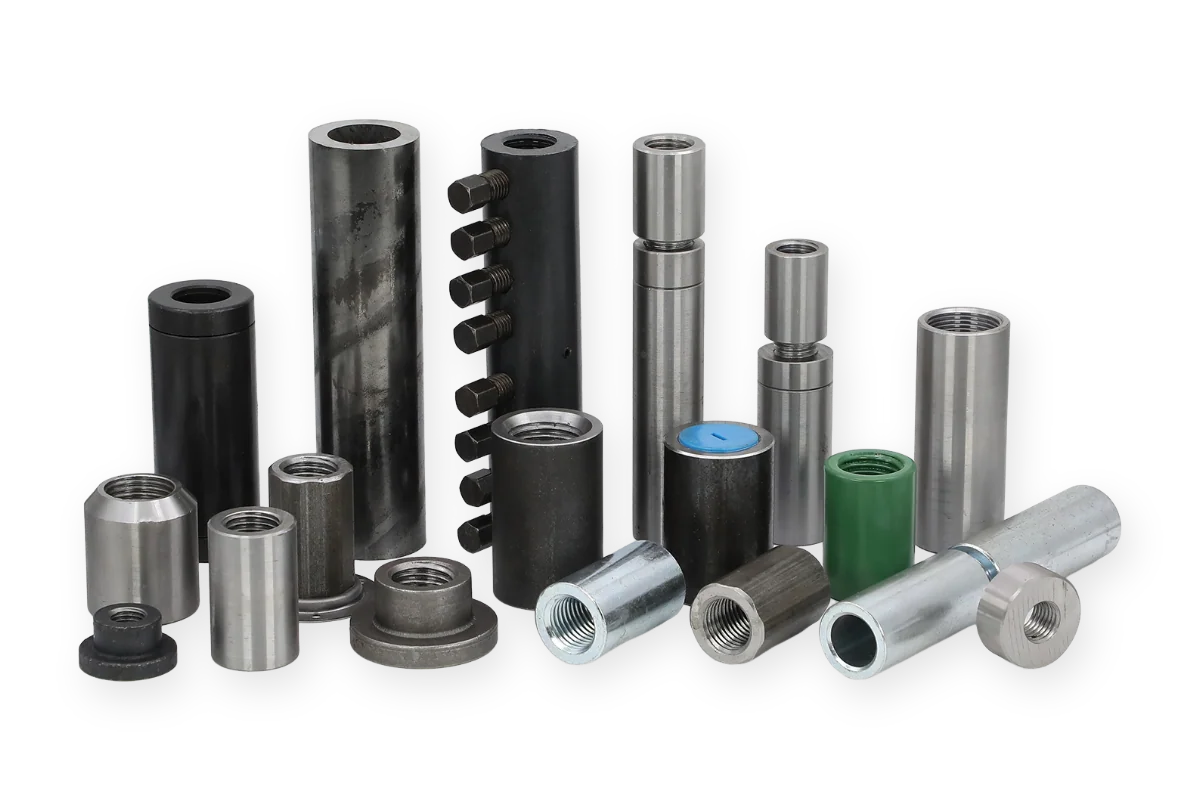
REBARLINK™ rebar couplers provide engineered rebar-to-rebar connections for reinforced concrete structures. Mechanical couplers replace conventional lap-splicing zones with a compact, controlled connection between reinforcing bars.
REBARLINK™ rebar couplers and mechanical splicing systems provide engineered rebar-to-rebar connections for reinforced concrete structures where structural continuity, installation efficiency, quality control, and reduced reinforcement congestion are critical.
Mechanical Rebar Couplers for Structural Reinforcement
Mechanical rebar couplers replace conventional lap-splicing zones with a compact connection between reinforcing bars. This can simplify reinforcement detailing, improve concrete placement around congested reinforcement, and support efficient construction on high-density structural projects.
Purpose & Performance
REBARLINK™ mechanical splices are designed to create high-integrity rebar connections without relying on conventional lap lengths or structural welding. The selected coupler system can be matched to project reinforcement, installation conditions, structural requirements, and applicable standards.
The portfolio includes cold-enforcement parallel-thread splicing, rib-peeling roll-threaded splicing, and precision taper-threaded connections. Each system uses a different bar-end preparation and connection principle to address specific fabrication and jobsite requirements.
100% Bar-Break Performance
REBARLINK mechanical coupler systems are engineered to achieve 100% bar-break performance, so that under the applicable product configuration and testing requirements, failure occurs in the reinforcing bar rather than at the splice.
Verified Under Dynamic & Seismic Loads
Engineered connections hold their grip under high-cycle fatigue and seismic oscillation, so continuity is maintained even where structures must resist repeated movement.
Reduced Steel & Lower Material Cost
By replacing long overlapping laps, mechanical splicing trims the tonnage of reinforcement needed and frees up supply where bar lengths are hard to source.
Rapid, Repeatable Site Assembly
Each connection follows the same controlled sequence, letting crews make dependable splices quickly and keep concrete pouring on schedule.
Connections in Tight or Inaccessible Spots
Couplers reach pile cages, beams, starter bars and confined splice zones where bending, hooking or full overlaps are physically impossible to place.
Documented Quality & Certification
Sample-tested under defined procedures and backed by product approvals, giving engineers slip, proof-load and traceability evidence for every splice family.
Benefits of Mechanical Rebar Splicing
Structural Continuity & Integrity
Provides a direct mechanical load-transfer path between reinforcing bars, subject to the selected system and applicable project requirements.
Optimized Steel Tonnage & Cost Control
Reduces or eliminates conventional lap lengths where permitted by project design, potentially reducing reinforcement congestion and material use.
Accelerated Construction Cycles
Supports repeatable installation procedures and controlled field assembly, helping reinforcement teams maintain construction schedules.
Improved Concrete Placement
Compact coupler connections can create more open space around reinforcement compared with long overlapping bars in suitable applications.
Quality & Traceability
REBARLINK™'s quality-control approach incorporates dimensional inspection and digital traceability features for applicable products and production batches.
Jobsite Efficiency
Shorter connection zones can simplify handling, reinforcement positioning, and installation in dense reinforcement cages.
Certifications, Standards & Quality Assurance
REBARLINK™ mechanical rebar coupler systems are supported by internationally recognized structural standards, product conformity certifications, dimensional inspection controls, and digital traceability systems for demanding construction applications. Project teams should confirm the applicable edition, approval route, and product-specific requirements before specification.

ISO 15835-1 requirements for mechanical splices in reinforced concrete.
ACI 318 structural concrete requirements, including reinforcement splicing provisions.
Complies with Chinese national standard GB/T 42796-2023.
Complies with Chinese national standard GB/T 42901-2023.

Complies with Chinese industry specification JGJ 107-2016.

UK quality approval for reinforcement steel.

Dubai Central Laboratory product certification.

China Academy of Building Research compliance.

Passed 100% bar-break tensile testing.

100% thread gauge inspection on every coupler.
QR code access to batch and inspection records.
Three REBARLINK™ Mechanical Coupler Systems
REBARLINK™ provides three core mechanical rebar coupler systems for different reinforcement preparation and installation requirements. For a practical technical introduction, see What Is a Rebar Coupler? in the REBARLINK Technical Hub.
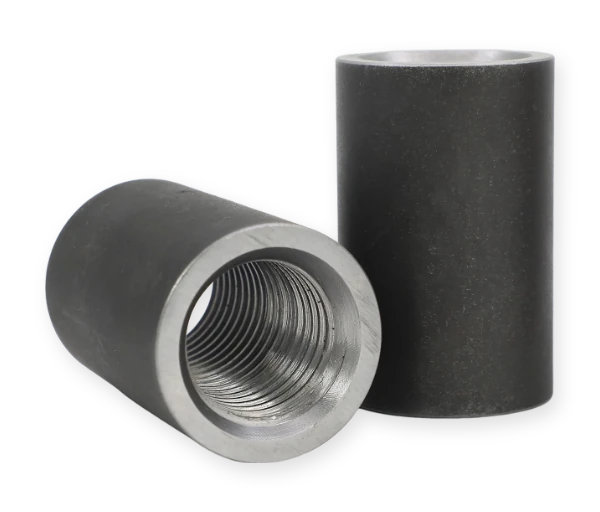
CES — Cold Enforcement Splicing System
Combines hydraulic cold-upset end forging with precision parallel threading to create a high-performance mechanical rebar connection.
- Cold-enforcement bar-end preparation
- Precision parallel thread connection
- 100% thread gauge inspection approach
- Designed for demanding structural applications
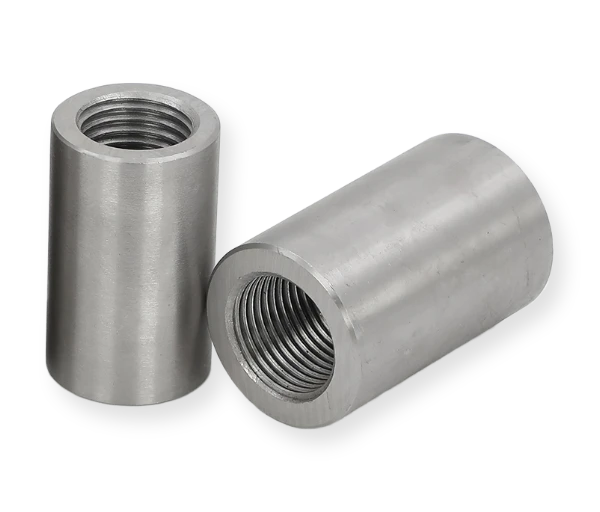
PPR — Rib Peeling & Roll-Threaded System
Integrates rib peeling with cold thread rolling to produce a precision threaded bar end and a compact mechanical connection.
- Automated rib-peeling process
- Cold roll-threaded profile
- Efficient bar alignment and engagement
- Suitable for dense reinforcement configurations
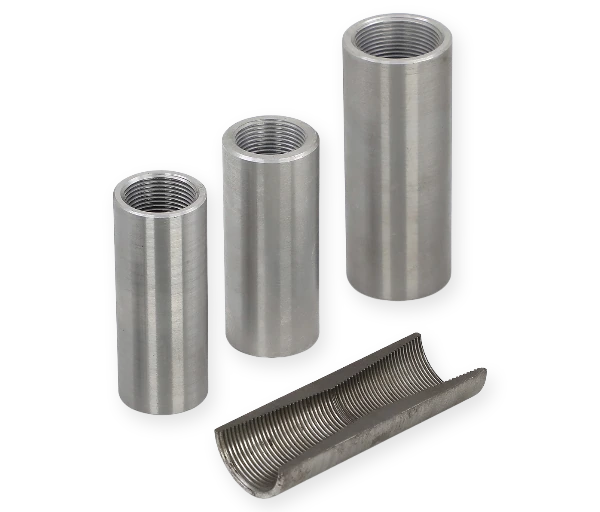
TTS — Taper Threaded System
A precision-machined taper-thread connection designed for rapid bar alignment and torque-lock assembly.
- Precision taper-thread geometry
- Rapid bar alignment
- Fast mechanical engagement
- Efficient field installation
Rebar Coupler Materials & Manufacturing
REBARLINK™ rebar coupler systems are engineered around controlled bar-end preparation, precision machining, thread formation and inspection. Material selection, dimensions, heat treatment and mechanical performance should be verified against the applicable product specification and project requirements.
| Property | Reference / Value | Remarks |
|---|---|---|
| Typical Material Grade | AISI 5140 | Medium-carbon, chromium-alloyed steel |
| Heat Treatment | Quench & Temper | Balanced strength and toughness |
| Surface Treatment | Phosphate coating / As-rolled | Corrosion protection during transit & storage |
| Thread Type | Parallel / Taper (system-dependent) | Precision-machined per coupler family |
| Bar-End Preparation | Cold upset / Rib peel / Saw cut | Selected per system specification |
| Inspection Method | 100% thread gauge + dimensional check | Per ISO 15835 / ACI 318 Type 2 |
| Traceability | QR-coded batch identification | Digital records per production lot |
Where Mechanical Rebar Couplers Are Used
High-Rise Buildings
Dense reinforcement zones, columns, walls, cores and transfer structures.
Bridges & Infrastructure
Structural reinforcement where continuity and controlled installation are important.
Nuclear & Critical Structures
High-consequence projects requiring documented quality and traceability.
Industrial & Energy Projects
Heavy reinforced concrete structures with demanding reinforcement layouts.
Mechanical Rebar Coupler FAQ
What is a mechanical rebar coupler?
A mechanical rebar coupler is a manufactured connector used to join two reinforcing bars mechanically, providing a controlled alternative to conventional lap splicing in suitable structural applications.
What rebar coupler systems does REBARLINK™ provide?
REBARLINK™ provides CES Cold Enforcement Splicing System, PPR Rib Peeling & Roll-Threaded System, and TTS Taper Threaded System.
What standards are referenced by REBARLINK™ coupler systems?
The REBARLINK™ product portfolio references standards and certification frameworks including ACI 318 and ISO 15835, together with applicable regional certification and conformity requirements.
Why use mechanical couplers instead of lap splices?
Mechanical couplers can reduce long lap zones, improve reinforcement congestion, simplify detailing and support controlled installation where mechanical splicing is permitted by the project design.
How do I select a REBARLINK™ coupler system?
Selection depends on rebar diameter and grade, connection performance, installation method, project standards, reinforcement geometry and applicable approval requirements. Contact the REBARLINK™ engineering team for project-specific selection.
What is 100% bar-break performance?
100% bar-break performance means the mechanical splice is designed so that, under the applicable qualification and test requirements, failure occurs in the reinforcing bar rather than at the splice.
What is the difference between CES, PPR and TTS?
CES uses cold-enforcement bar-end preparation with parallel threading, PPR uses automated rib peeling and roll threading, and TTS uses a precision taper thread for rapid assembly. The right system depends on your field processing and installation needs.
What rebar diameters are available?
REBARLINK™ coupler systems cover reinforcing bar diameters across the standard splicing range, with project-specific sizes evaluated by the engineering team on request.
Need Technical Specifications or a Quote?
Our engineering team can assist with project specifications, coupler selection, technical documents, CAD requirements, compliance documentation and quotation.